Column · @alexisonwq269
Garage Door Accessories to Enhance Daily Functionality

A garage door does far more than open and close. On many homes, it is Garage Door Accessories the most frequently used entrance, a major moving component, and a daily point of friction when something feels slow, noisy, or unreliable. People often think first about replacing the door or the opener, but in practice, a handful of well-chosen garage door accessories can make a bigger difference to everyday use than a full system overhaul.
That becomes obvious once you spend time around real garages. Some are tidy workshops with a side wall full of tools and bikes hanging from the ceiling. Others are packed with freezers, strollers, sports gear, and holiday bins. In both cases, the garage door gets cycled constantly, usually by people who just want the system to work without thought. The best accessories do exactly that. They remove small irritations, improve safety, and make the space easier to use in all seasons.
The key is not buying every add-on on the shelf. It is choosing accessories that solve the problems you actually live with, whether that means poor lighting, weak signal range, accidental lockouts, loud operation, or water finding its way under the bottom seal after every hard rain.
Start with the way you really use the space
Before looking at products, it helps to be honest about how the garage functions in your household. A garage attached to the kitchen entry has very different needs from a detached garage used mainly for storage. A family with teenage drivers usually benefits from extra access controls and better visibility. Someone who uses the garage as a workshop often cares more about lighting quality, weather sealing, and quieter operation.
One of the more common mistakes is buying accessories for occasional scenarios while ignoring the daily ones. For example, a homeowner might invest in a decorative hardware kit because it photographs well, but still struggle every evening with poor overhead light, a wall button mounted in an awkward spot, or a remote that only works if the car is halfway into the driveway. Daily functionality comes from reducing repetition, hesitation, and inconvenience.
I have seen modest upgrades completely change how a garage feels to use. A simple wireless keypad can stop the cycle of hidden spare keys and panicked phone calls. A brighter LED light module can turn a dim concrete box into a usable entry and workspace. A better bottom seal can keep out enough dust and water that stored items stop needing constant cleanup. None of those are glamorous purchases, but they improve real life.
Smart controls that earn their keep
Smart opener compatibility gets plenty of attention, and for good reason. When it is set up properly, app-based control is one of the most practical garage door accessories available. It lets you check door status from anywhere, close a door left open by mistake, and receive alerts when the door is used outside normal hours.
That said, smart features are only useful when they are dependable. In homes with weak Wi-Fi in the garage, the experience can be frustrating. Delayed notifications, dropped connections, and failed commands tend to sour people on the idea quickly. Before adding a smart hub or replacing an opener for connectivity, check signal strength in the garage itself. Brick walls, detached structures, and metal-backed insulation can all reduce performance. In some situations, a mesh node or dedicated extender solves the issue more effectively than changing the garage hardware.
A good smart control setup also depends on clear permissions. If multiple family members use the garage, temporary or limited access can be more useful than sharing one universal code or remote. This matters for dog walkers, delivery access, house sitters, and service technicians. Time-based access can be cleaner and safer than handing out physical remotes that tend to disappear into glove boxes and junk drawers.
For households that receive frequent deliveries, camera-integrated garage access has obvious appeal. Still, it is not the right fit for everyone. Some people prefer the simplicity of knowing the garage opens only when they are physically present. Smart access is best when it supports your routines, not when it adds another device to troubleshoot.
The accessories that solve the most common annoyances
When homeowners ask where to begin, a few upgrades come up again and again because they address frequent pain points.
- A wireless keypad for keyless entry, especially useful for kids, runners, and anyone who does not want to carry a house key
- Additional visor remotes or compact keychain remotes, so access is not tied to one vehicle
- LED garage light modules or opener-integrated lighting upgrades for better visibility
- Reinforced weather seals, including bottom seals and perimeter seals, to reduce drafts, debris, and water intrusion
- Motion-activated interior lighting or wall control panels with light timers for safer entry at night
That list is practical rather than flashy, and that is the point. Each accessory removes a repeated inconvenience that most people notice several times a week.
The wireless keypad deserves special mention because it solves more than one problem at once. It gives access without a key, prevents lockouts, and works well for households in motion. Parents like them because children can get in after school without carrying keys. Walkers and cyclists like them because they can leave with the garage closed and return without a remote. The main trade-off is maintenance. Keypads sit outdoors, so batteries and weather exposure matter. Spend a little more for a unit with good button feel and a backlit pad if the garage faces a dark side yard or alley.
Lighting changes everything
Poor garage lighting is one of the most underestimated everyday problems. Many garages still rely on a single opener bulb in the center of the ceiling, which leaves corners dark and makes the whole room feel less usable. Once shelving goes up and vehicles fill the space, visibility gets even worse.
Better lighting is one of the highest-value garage door accessories if you think beyond the opener itself. Some modern openers support high-output LED side panels or compatible plug-in light modules that can be triggered with door operation or motion. Even if the garage is not used as a workshop, brighter light near the door opening improves safety while unloading groceries, wrangling children, or stepping around wet floors in winter.
Color temperature matters more than people expect. Very cool, harsh white can make the garage feel clinical and produce glare off concrete. Warm light feels softer but may not show detail as well when working on tools or car interiors. In most garages, a neutral white in the middle range tends to work best. It keeps the space readable without making it feel like a warehouse.
There is also a reliability angle here. Some older garage door openers can experience interference from certain LED bulbs, especially cheap ones not designed for opener use. That can affect remote range. If a remote suddenly stops working well after a lighting swap, the bulb may be the culprit. Using opener-compatible LEDs often solves it.
Quiet operation is a quality-of-life upgrade
Noise travels. In attached homes with bedrooms above or beside the garage, opener and door noise can become a nightly annoyance. People often assume that noise is normal, but several accessories can reduce it significantly.
Vibration isolation kits, nylon rollers, belt-drive compatible upgrades, and proper lubrication all help. Nylon rollers are especially worthwhile on older steel doors that still run on worn metal rollers. The difference is not subtle. A door that used to rattle its way Garage Door Accessories through the track can become much smoother and quieter with the right replacements. That said, rollers are not just accessories in a decorative sense. They are wear components, and replacement should be done with attention to door balance and spring tension safety.
Rubber isolation mounts between the opener and ceiling framing can also make a noticeable difference, particularly in homes where the opener vibration resonates through joists. It is one of those fixes that sounds minor until you hear the before-and-after. You still hear the door operating, but the sound is less harsh and less likely to wake a light sleeper above the garage.
If the door is very loud even after basic upgrades, accessories may not be enough. Worn hinges, misaligned tracks, poor spring balance, or a tired opener may be the real issue. Accessories work best when the core system is mechanically sound.
Weather sealing and floor contact, where comfort meets maintenance
A garage that leaks air and water is harder to use, harder to keep clean, and harder on whatever you store inside. Weather sealing is not exciting, but it changes how the space performs. Bottom seals, stop molding seals, threshold seals, and rodent-resistant seal variations all have a place depending on the opening and the climate.
Bottom seals often wear gradually, so the decline is easy to miss. They stiffen, crack, flatten, or simply stop conforming to uneven concrete. You may not notice until wind starts blowing leaves inside or a rainstorm leaves a damp line across the floor. Replacing a bottom seal is a routine upgrade that can make the garage feel more finished right away.
Threshold seals on the floor can be useful in garages that slope toward the door or where wind-driven rain regularly pushes inward. They are not ideal in every setting. If snow shovels, wheeled carts, or low-clearance vehicles use the opening constantly, a raised threshold can become an annoyance. That is the kind of trade-off people only understand after living with one. In a flood-prone or dusty area, the barrier may be worth it. In a spotless suburban garage with frequent bike traffic, maybe not.
Side and top seals matter too, especially on older wood jambs or slightly irregular openings. A decent perimeter seal can reduce dust and insects and make the garage less drafty during winter. It will not turn the space into a conditioned room, but it can noticeably improve comfort and cleanliness.
Backup power and access during outages
If you live in an area with even occasional outages, battery backup is less of a luxury than it used to be. Many newer opener systems offer built-in battery backup, and some local codes effectively require it. From a daily functionality perspective, the benefit is simple. The door works when the power does not.
That becomes especially important if the garage is the primary entry or if mobility concerns make manual lifting impractical. A well-balanced door can often be lifted by hand, but not everyone wants to disconnect an opener in the dark during a storm and wrestle with a heavy panel. Backup power removes that stress.
External emergency release kits are another useful accessory for garages without a secondary entry door. If the opener fails and the garage is the only way in, an outside emergency release can save a lot of trouble. Security matters here, so the product choice and installation quality are important. The goal is emergency access without creating an easy vulnerability.
Wall controls, sensors, and the little details that change habits
Some of the most effective garage door accessories are small interface upgrades. A better wall control with a vacation lock, programmable light delay, or motion-triggered illumination can change how people use the space every day. Basic wall buttons often do the minimum. Upgraded controls can make the garage more secure and more intuitive.
Photo-eye sensor performance is another overlooked area. Clean, aligned safety sensors prevent nuisance reversals and failed closing cycles. Protective brackets or shields can help in garages where bikes, trash bins, or kids regularly bump the sensor area. If you have ever stood in the driveway pressing the remote over and over because the door refuses to close, you already know how much a small sensor issue can interrupt routine.
Parking aids can also be worthwhile in tight garages. A laser parking guide or even a simple visual reference system helps drivers stop in the right place without creeping too far forward. This matters more than many people admit. Proper parking preserves walking clearance, keeps hatchbacks from hitting stored items, and can prevent damage to the door itself if roof racks or cargo boxes are involved.
Decorative accessories have a place, but function should come first
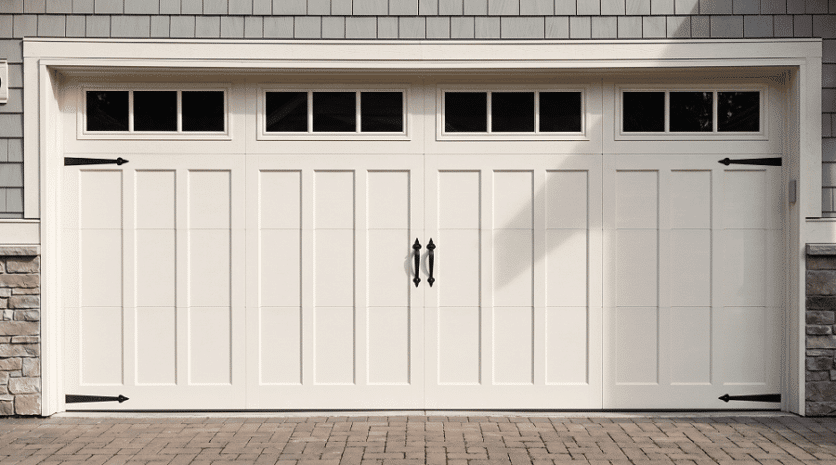
There is nothing wrong with wanting the garage door to look better. Handle kits, strap hinges, window inserts, and carriage-house style accents can improve curb appeal, especially on front-facing garages that dominate the exterior. But decorative garage door accessories should follow functional needs, not replace them.
I have seen homeowners install beautiful faux hardware on a door that still had a torn bottom seal and dim lighting. The curb appeal improved, but the daily experience did not. If the budget allows both, great. If not, put money into operation, safety, and weather resistance first. You notice those every day. Decorative accessories earn their best return when the underlying system already works well.
There is also a restraint principle here. Too many decorative add-ons can look forced, particularly on modern homes with clean lines. Match the style of the house and the actual construction of the door. A plain steel sectional door does not always benefit from elaborate faux hinge treatments. Sometimes a clean finish, black fixtures nearby, and good lighting around the garage entrance create a better overall effect.
Choosing accessories that fit the door you have
Not every accessory works with every setup. Compatibility matters more than many buyers expect. Opener brands use different communication standards, rail systems, battery formats, and smart integrations. Door construction affects hardware fitment. Even something as simple as adding insulation panels can change door weight enough to affect spring balance.
That is why impulse accessory purchases can backfire. A universal remote may technically pair but offer weak range. A smart controller may work, but with limited feature support. A replacement seal may fit the opening width but not the retainer channel on the bottom of the door.
If you are sorting through options, check these five points before you buy:
- Opener brand, model, and manufacture year
- Door material and panel style
- Existing track and roller condition
- Wi-Fi strength in the garage, if adding connected features
- Whether the garage has a second entry door for emergency access
Those details save time and reduce returns. They also help separate accessories that are genuinely useful from those that just sound useful in product descriptions.
When professional installation makes sense
Some garage door accessories are easy weekend projects. Keypads, remotes, and certain lighting add-ons usually fall into that category. Others sit much closer to the mechanical core of the door system, and that changes the risk.
Rollers, spring-adjacent components, cable-related parts, and anything affecting door balance deserve more caution. Garage doors are heavy, springs store serious tension, and mistakes can get expensive or dangerous quickly. The line between accessory and repair can blur fast. If an upgrade requires partial disassembly near the spring system, many homeowners are better served by hiring it out.
Professional installation is also worth considering when several small issues overlap. For example, if the door is loud, slightly uneven, letting in water, and struggling to close reliably, a service call can address the system holistically. A technician may identify that the best improvement is not a stack of separate accessories, but a tune-up plus a few specific upgrades.
The best accessory is often the one you notice least
That may sound odd, but it holds up in practice. The most valuable garage door accessories tend to disappear into routine. The keypad just works. The light comes on when your hands are full. The seal keeps the floor dry. The backup battery keeps the door moving during an outage. The motion-sensitive wall control means no one walks through a dark garage anymore.
That is what daily functionality looks like. It is not spectacle. It is the absence of friction.
If you are prioritizing where to spend first, think in terms of repeated use. Count the annoyances that happen three times a week or more. Remote range issues, dark corners, wet floors, awkward access, noisy operation, and accidental open-door moments deserve attention before niche features do. A garage that feels easier, quieter, brighter, and more predictable adds value far beyond the cost of a few smart upgrades.
Garage doors ask a lot of their hardware. They move hundreds or thousands of times a year, in heat, cold, dust, humidity, and darkness. The right accessories support that workload and make the space work better for the people using it. That is the standard worth aiming for, not more features for their own sake, but a garage that performs cleanly in the background of daily life.
Select Garage Doors
11479 Pine Dr, Parker, CO 80134, United States
+1 303-228-0018
FAQ About Garage Door Accessories
What are garage door parts called?
Common door components include panels, hinges, rollers, tracks, springs, cables, and weather seals. The opener is a separate operating system, with accessories such as remotes, keypads, and compatible smart controls. Identify the door and opener model before choosing a part; springs, cables, and other loaded components should be assessed and serviced by a trained garage door technician.
What garage door supplies do I need?
The right supplies depend on the problem or upgrade you want to address. Common accessories include replacement remotes, wireless keypads, weather seals, decorative handles and hinges, and compatible smart controls. Check model compatibility and the manufacturer's instructions before buying. A technician can inspect the system and recommend suitable accessories without replacing otherwise serviceable equipment.
Where can I find garage door accessories in Parker?
Select Garage Doors supplies and installs garage door accessories for Parker homeowners. Contact the company with your opener brand and model, door details, and the upgrade you want so it can confirm compatibility, availability, pricing, and installation requirements. Confirm collection or appointment arrangements before visiting.